Print/Digital

Women in space and meal planning for space travel

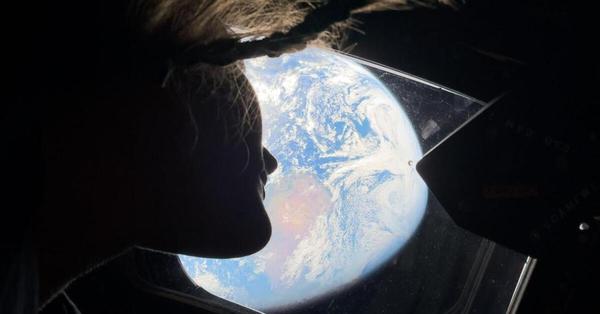
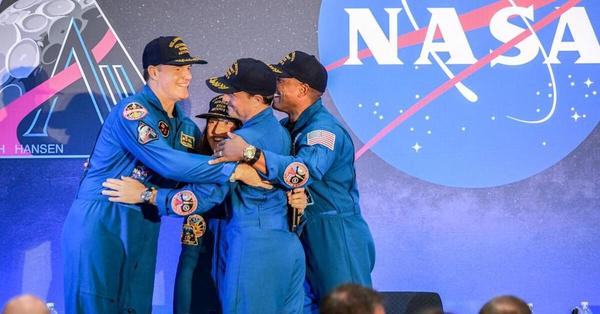
During the Artemis II mission, Christina Koch became the first woman to travel to the moon. Before Artemis, she was a flight engineer on the International Space Station for Expedition 59, 60 and 61 back in 2019. During her time on the space station, Koch participated in the first all-female spacewalk. She has spent 338 days in space across during her time as a NASA astronaut.Koch’s role in the Artemis II mission follows in the footsteps of other women in space exploration firsts like Eileen Coll...

Engineering, computer science seniors showcase innovative projects ahead of graduation

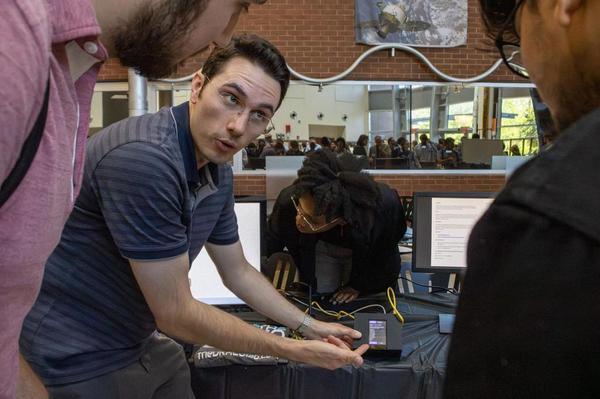
Engineering and computer science seniors filled the Engineering Building II atrium on Friday, presenting gadgets and software while mingling with judges at the College of Engineering and Computer Science’s semesterly Senior Design Showcase.More than 200 projects were judged during the week leading up to the showcase, with the top 45 selected to be judged at the event. The showcase gave students the opportunity to network with industry professionals and UCF alumni.
A group from each of th...

UCF student faces 20 charges, up to 280 years on child pornography charges

A UCF student faces 20 felony child pornography-related charges after being arrested by the UCF Police Department, according to the Florida Attorney General’s office. Among the files recovered from 21-year-old Joshua James Smith's phone during forensic investigation were graphic images and videos of child sexual abuse material, including that of infants. Smith also used Kik, a messaging app, to solicit sexual favors and images from minors, according to a press release from the Florida Attorney G...

Asteroid mining and space hospitality

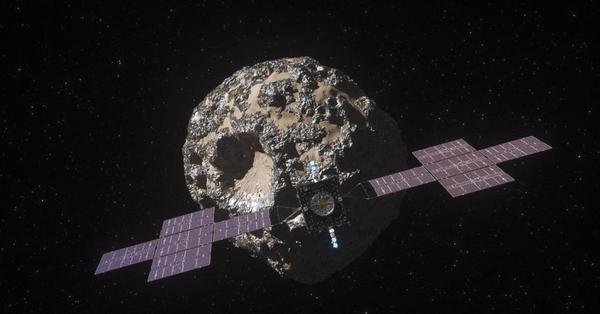
Mining asteroids could shift from science fiction to reality, driven by the need for off-Earth resources.Phillip Metzger, a planetary scientist at the University of CentralFlorida, said the reasons to mine in space are many – sci-fi fantasies, AI and geopolitical boasting to name a few -- but the real hold up has been economic need.“For decades now, it has not been a technological barrier,” Metzger said. “We've had the ability to do it. It's always been an economic barrier and a political barrie...

Key piece of Artemis III mission arrives at Kennedy Space Center

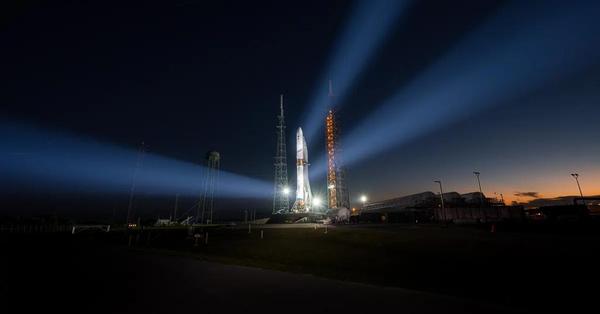
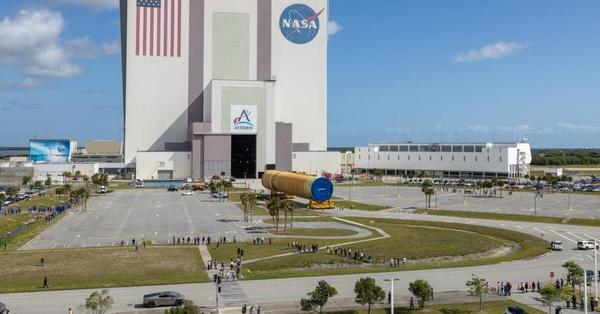
A key piece of NASA’s next Artemis moon mission has arrived at the Kennedy Space Center ahead of a potential launch next year.The majority of the core stage of NASA’s SLS rocket – which holds liquid fuel and flight control systems – departed its assembly facility in New Orleans last week. It arrived at KSC by barge on Monday. It was offloaded and transferred to the Vehicle Assembly Building.There, it will join other pieces of the Artemis III launch vehicle, like the two solid rocket boosters and...

Could there be life on other worlds? Scientists look to Mars and the asteroid Bennu for that answer

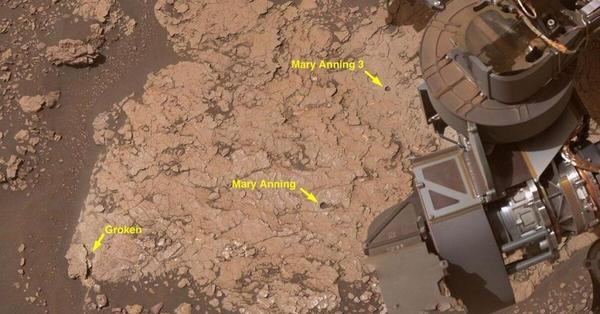
For centuries, scientists have asked whether life is unique to just our planet.In a new study the Mars rover, Curiosity, found elements that here on Earth are the building blocks of life. However, even if it links to life, it may have been created abiotically, or without lifeforms.Amy Williams, an astrobiologist at the University of Florida and a scientist on the NASA Curiosity and Perseverance rovers, said Curiosity was able to discover this using a new technique called thermochemolysis.“It's j...

Artemis Two is back on Earth and a new moonshot is underway

Hundreds of thousands of people lined the streets and beaches near the Kennedy Space Center, hoping to catch a glimpse of the Orion spacecraft and Space Launch Systems rocket take off from NASA’s Kennedy Space Center April 1.Our host, Brendan Byrne, was there through it all. From launch to splash down, he reported on the crew’s journey.Hear more about Byrne’s coverage of Artemis II and more about the mission in the newest transparency corner.Along with captivating the public, Artemis II is inspi...

Prep for next Artemis mission begins with launch pad’s Crawler-Transport

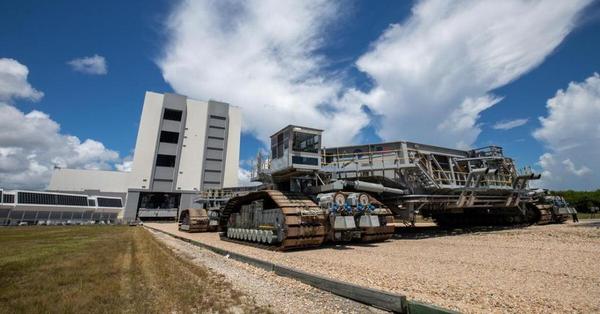
NASA is already preparing for Artemis III after the success of Artemis II, the mission that returned humans to the moon for the first time in half a century.The Crawler-Transporter – the massive vehicle that moves the mobile launch pad and the SLS rocket that launches Orion from the hangar to the launch site – will start its trek at Kennedy Space Center later this week. It will return the launch platform to the Vehicle Assembly Building, where the assembly of Artemis III’s rocket will begin.John...

Artemis II mission to moon, return to Earth inspires SpaceU community

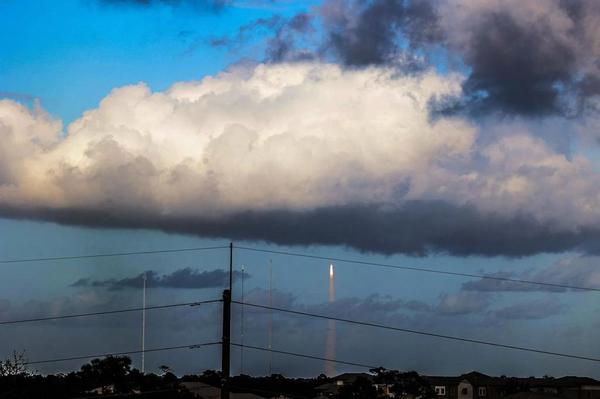
The Artemis II astronauts completed the first human voyage to the moon in over 50 years, exciting UCF students and faculty alike.Artemis II launched on April 1 at 6:35 p.m. from Kennedy Space Center, around 30 miles away from UCF. The crew splashed down off the coast of San Diego Friday night, arriving safely from their almost 10-day voyage around the far side of the moon.
During the summer of 2024, senior computer engineering major Megan Danh worked on the Graphical User Interface of an...

Artemis II flies by the moon and a look at NASA’s budget proposal

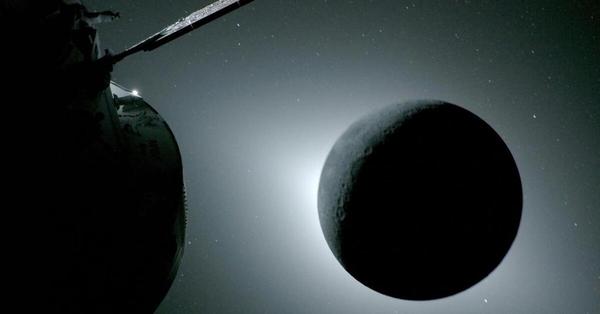
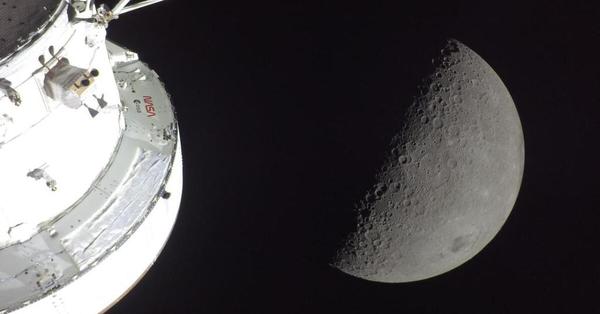
During the Artemis II lunar flyby on Monday, the astronauts onboard took thousands of photos and made geological observations of around 35 targets on the far side of the moon. The astronauts were the first to see the far side of the moon from that perspective, and the data they collected will help planetary scientists here on Earth.SEE PHOTOS: NASA releases first images from moon flybyAt the University of Central Florida, planetary scientist Addie Dove is preparing to send an instrument to the l...

Artemis II images prepare UCF researchers for their own lunar mission

During the Artemis II lunar flyby on Monday, the astronauts onboard took thousands of photos and made geological observations of around 35 targets on the far side of the moon. The astronauts were the first to see the far side of the moon from that perspective, and the data they collected will help planetary scientists here on Earth.At the University of Central Florida, planetary scientist Addie Dove is preparing to send an instrument to the lunar surface as early as 2028. Lunar-VISE aims to unde...

Artemis II is a go for launch plus, how NASA is helping tortoises

NASA’s Artemis II moon mission could launch on a flyby mission around the moon from Florida’s Kennedy Space Center this week.It’s the first crewed mission to visit the moon since the final lunar Apollo mission in 1972. And this crew is taking with them some of the most advanced observational instruments – their eyes.We’ll speak with Artemis II mission scientist Barbara Cohen about how the crew trains to make scientific observations with their eyes and how that will help future mission land on th...

Moon science and Curious Space

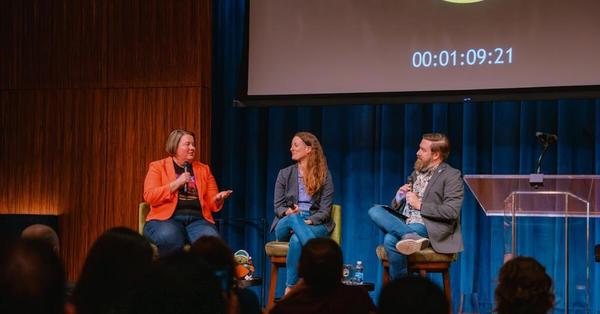
This is the first episode of Space on Tap, a special "Are We There Yet?" event series. It's a live, semi-scripted space-science show. This episode was held at Judson's Live in Orlando on March 23. NASA’s Artemis program could hit a big milestone as soon as April 1 with the launch of the Artemis II mission. It will be the first human mission to the moon since Apollo 17 in 1972.There’s fresh excitement about a new human moon mission, but for Kerri Donaldson Hanna and Addie Dove from the University...

Detecting plastics from space and how rovers can think for themselves

NASA is studying minerals, dust, and potentially plastics, on land from space.On board the International Space Station, NASA has an instrument named EMIT that studies minerals and dust that impact the Earth’s atmosphere.Kelly Luis, the EMIT aquatic applications lead said the instrument uses an imaging spectrometer to study minerals and dust -- and how that interacts with sunlight.“When that light bounces back to an instrument or detector, it has a very specific spectral fingerprint, Luis said. “...

Student-designed experiment to be sent to the International Space Station

Three UCF students will send an experiment up to the International Space Station to study kidney stone development in a microgravity environment.It will launch on Mission 21 to the space station in mid-August on a SpaceX rocket.
The experiment is part of the National Center for Earth and Space Science Education’s Student Spaceflight Experiments Program. The project’s team consists of sophomore electrical engineering major Sammi Jones, senior biomedical sciences major Andrei Nesterenko an...

ICE looking to lease office in Research Park near UCF, documents show

U.S. Immigration and Customs Enforcement may be looking to lease an office building less than three miles from UCF's main campus.According to documents obtained in a recent WIRED article, the Research Commons building at 12249 Science Drive is a part of several leases requested by ICE. It is unclear how the agency intends to utilize the space.The office is in proximity to apartment complexes where students reside, including The Village at Science Drive, The Nine at UCF and Knights Landing. The s...

Moon science, a deeper look at one of Jupiter’s moons and our own

Millions of miles from our planet, scientists think that one planetary body could harbor life.Europa is an icy moon, with an ocean underneath its surface. It’s one of Jupiter’s 95 moons, and it’s slightly smaller than Earth’s.Within Europa’s icy waters is where scientists think they may find habitable conditions, or even signs that life once existed there.That’s why NASA launched the Europa Clipper mission back in 2024. The probe will reach Europa in 2030, hoping to observe and find potential ev...

Artemis II on the cover of TIME and Pandora on the hunt for other worlds

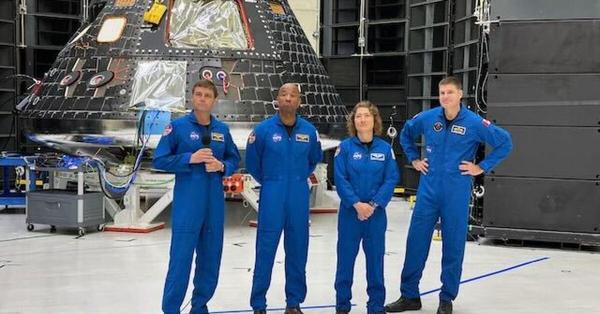
The Artemis II crew of NASA astronauts Reid Wiseman, Victor Glover and Christina Koch, along with Canadian Space Agency astronaut Jeremy Hansen will be launched on a mission to the moon and back no earlier than March. This will be the first time humans have been to the moon since 1972.Jeffrey Kluger, editor at large at TIME, called Artemis II a landmark for humanity, and believes the crew feels the weight of the mission.“None of these crew members were alive the last time we walked on the moon....

Artemis II, lunar lessons and Canadian contributions

Col. Jeremy Hansen, an astronaut and Artemis II mission specialist, will be the first Canadian sent to the moon.He was a part of the Canadian Space Agency’s third round of astronaut recruitment in 2009. Given the Canadian Space Agency’s relatively small size, the milestone pleasantly surprised fellow Canadian Jake Robbins, the co-host of Off Nominal.“It's only been American astronauts who have ever left low-Earth orbit, and if you knew nothing about this mission, and you'd asked yourself in the...
Load More